Business Services

Over 70% of individuals managing gluten and allergen free diets indicate that eating out at restaurants is one of their top concerns. At the same time, over 60% of businesses surveyed indicate an increase in special diets guests.
Our Global Market Research reveals that the primary factors which influence special diet guests when eating away from home include: safety of meals; lack of knowledgeable restaurant and food service personnel as well as fear of a gluten or allergic reaction.
Knowledge & understanding coupled with clear table-side communication are the keys to ensuring safe, enjoyable gluten free and allergy friendly experiences for guests. Appropriate training on procedures for handling special diets also need to be in place. Establishing protocols for special dietary needs provides consistent dining experiences for each guests.
Food Service Educational Resources
-
Gluten Free and Food Allergy Definitions
-
Learn About Gluten and Wheat Free Grains
-
Global Gluten and Allergy Labeling
-
Culinary Considerations for Serving Guests (PDF)
-
Innovative Consulting Solutions for Food Service and Travel Providers
Working Around Food Allergens

Excerpted from Kim Koeller's Interview with Food Service Magazine New Zealand
With more food allergies to look out for, the food service industry’s knowledge is on the increase and improvements are being made. But there is still more to be done.

Living with allergies is one thing, but catering to the allergic is another – a point made very clear when an anaphylactic seizure takes place while dining out.
Kim Koeller knows these dangers and, being allergic to multiple conditions herself, was in Auckland, New Zealand speaking to the industry on her extensively researched Let’s Eat Out! travel series. Diagnosed with coeliac disease and allergic to dairy, seafood, nitrates, MSG, Penicillin and even nutrasweet, Koeller also experiences reactions to goose feathers and cats.
But living with these potential conditions has prompted her to aid both consumers and food service staff in collaborating better on dealing with allergies and the likelihood of more arising. “With more chemicals in processed foods, MSG and preservatives there is more potential for allergies. But then it’s often hard to tell, there is a lot misdiagnosis. With my food allergens, my symptoms were quite different so it took a while for them to figure out what was going wrong,” Koeller says.
The series is a joint effort between Koeller and food industry professional Robert La France. “Robert could eat anything – I couldn’t. As I ate 80 percent of my meals away from home, in over 25 countries, I saw a real need for this type of product and thought ‘why should an allergy affect my freedom to eat out’. There was very little other material on the matter. “So this series is all about what you can adventure to eat – not what not to eat.”
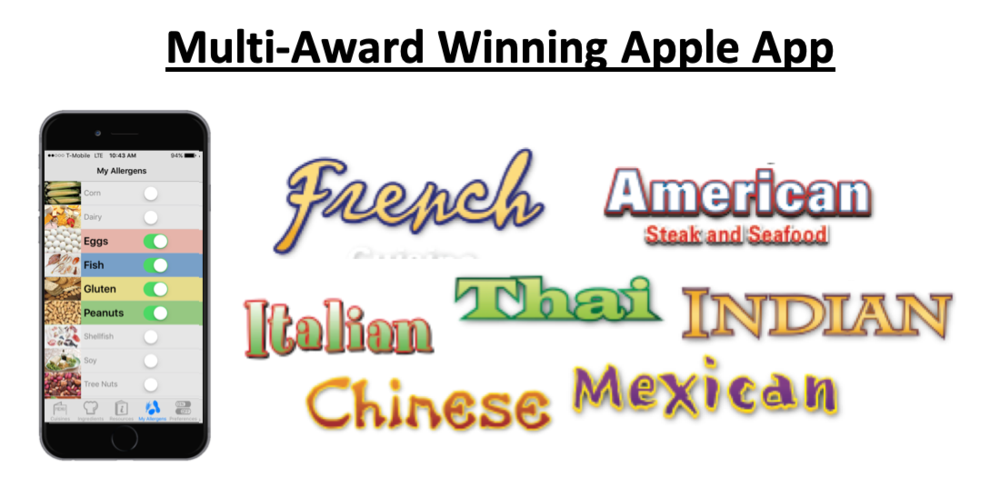
With an estimated 300 million-plus people managing food allergies globally, she set to work on the series with different food language and dish phrases. Koeller says the pair utilized the resources of 75 food, health, diet and language professionals to “revise, revise, revise” the information to its finished product format in paperback books, ebooks and mobile app.
The result could be likened to the Lonely Planet Guide for allergy sufferers – detailed, user friendly chapters on food source techniques advice, what to look for from a selection of ethnic dishes, what to look for in beverage ingredients and how to better ascertain the needs of customers in a hospitality setting.
She points out that New Zealand and Australia are world leaders when it comes to labeling – having first instituted product labeling laws in 2002, followed by the European Union in 2005 and the US in 2006 with gluten free labeling in 2013. This gives NZ kitchens some edge when it comes to properly identifying product ingredients and Koeller says many of the nation’s caterers and restaurants are well advanced with catering to the allergic.
Checklist for Management to Cater to Gluten & Allergen Free Guests
-
Do staff know about special diets?
-
Are there training program available to improve staff awareness?
-
Is there a plan to take into account the need for ongoing training on the process and new allergies that are arising?
-
Is there a certification process to advertise to guests?
-
Is there an action plan in place to aid customers who have suffered a serious allergic reaction?
-
What are other restaurants doing to offer allergy-free meals?
She also points out that catering and hotels have more of an advantage with food preparation, as they can access a customer’s dietary requirements often well in advance. “But of course it’s different with restaurants, as much is prepped well in advance so we’re trying to get across to consumers, as well, the nature of planning for their own needs.”
Checklist for Kitchen to Prepare Safe Gluten & Allergy Free Meals

-
Is food product labeling clear?
-
What ingredients on your menu commonly cause allergic reactions?
-
Are there dishes that can be easily altered to cater for those with special dietary needs?
-
Which products/dishes can’t be altered to suit special dietary requirements?
-
Is there a dedicated workspace/set of kitchen equipment used to prevent cross contamination?
-
Is there a system in place to clearly separate normal from special dietary orders?
-
Have special dietary dishes been confirmed, once made to wait staff?
From the kitchen side, Koeller’s advice includes having a dedicated or separate work area, fryer and utensils to prevent cross contamination, prepping with flour that has no allergen ingredients in it, serving up food on different shaped or styled plates and using different colored order dockets. Then there’s the need for effective communication between front of house and kitchen.
Checklist for Front of House to Communicate with Guests & Kitchen
-
Are special dietary requirements of a guest made clear?
-
Have these been effectively explained to the kitchen?
-
Does anything need to be explained to the guest following feedback from the kitchen?
-
Upon service, can the kitchen confirm that any special requirements have been made?
-
Has the guest’s experience confirmed that everything has been made right – on presentation and after their meal?
-
Are there any interactions observed by the experience that can be advised to management to better improve the communication process?